
Every dog owner has had this moment: you take your dog on a long, hard walk or a full hour at the dog park, they come home and collapse on the floor, and you think, great, job done. Then two hours later they’re pacing, whining at the door, or chewing the corner of the rug like it owes them money. Physically gassed, mentally still wound up. That gap is the whole point of this post.
Exercise and enrichment get used almost interchangeably in casual conversation, but they are not the same input and they don’t produce the same output in a dog’s nervous system. Understanding the difference matters a lot more if you have a dog who’s reactive, anxious, high drive, or just seems to never really settle no matter how much you run them.
What “tired” actually means in a dog’s body
Physical exercise, running, fetch, a long fast-paced walk, works the musculoskeletal system and cardiovascular system. It burns glycogen, raises heart rate, and eventually produces genuine physical fatigue. That part is real and it matters, especially for young, athletic dogs who need an outlet for raw physical energy.
But physical fatigue and nervous system regulation are two different things. A dog can be muscularly exhausted and still be sitting at a fairly high level of arousal, which is the general term for how activated a dog’s nervous system is, how “keyed up” they are, regardless of whether that activation feels good (excitement) or bad (stress). A dog vibrating with excitement after fetch and a dog panting anxiously after a stressful vet visit can both register as physically tired. Neither one is necessarily calm.
The exercise-arousal trap

Here’s where a lot of well-meaning owners go sideways, especially with reactive or anxious dogs. Sprinting, chasing, and intense play activate the sympathetic nervous system, the “go” system responsible for the fight-or-flight response, and it comes with a rise in adrenaline and cortisol, the stress hormone that helps mobilize energy for action. That’s not inherently bad. But it means high-intensity exercise doesn’t calm a dog down chemically, it revs them up, and that chemical state can take hours to fully clear the system.
This is why some dogs who are already anxious or reactive get worse, not better, after a hard run or an amped-up play session at daycare. You didn’t relax them. You physically tired them out while leaving their internal arousal dial turned up. Add a trigger on top of that (another dog, a loud noise, a stranger at the door) and you get what’s sometimes called trigger stacking, where stress from one event doesn’t fully dissipate before the next one hits, so the reaction to that second, smaller trigger looks disproportionate. It isn’t disproportionate. It’s cumulative.
What enrichment is actually doing differently

Enrichment, sniffing on a walk, scatter feeding, food puzzles, scent work, chewing, foraging games, works a completely different system. These activities tend to engage the parasympathetic nervous system, the “rest and digest” branch that lowers heart rate and supports actual physiological calm rather than just physical depletion.
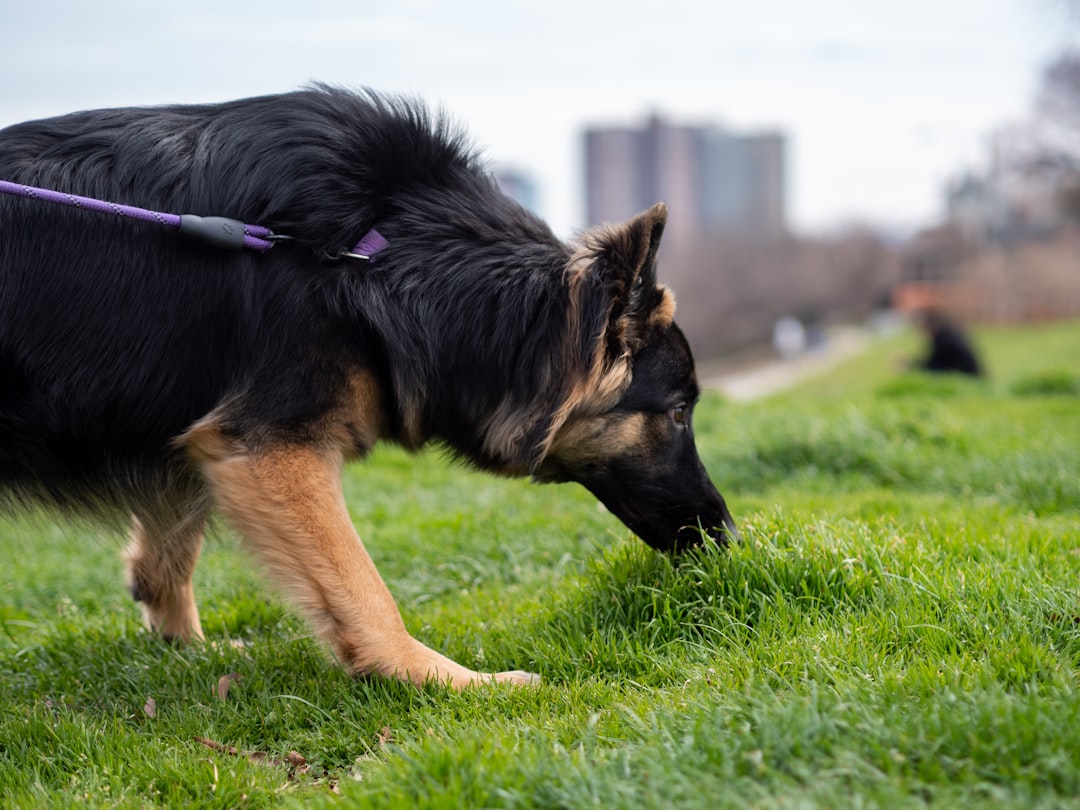
Sniffing in particular deserves more credit than it usually gets. Olfaction is a dog’s dominant sense, and letting a dog process scent information isn’t a passive activity, it’s cognitively demanding. Their brain is decoding chemical information, building a map of who’s been where and when. That kind of mental work is genuinely tiring in a way that doesn’t come with an adrenaline spike. A 20-minute sniff-heavy walk can leave a dog more settled than a 45-minute power walk, even though it covers a fraction of the ground.
Enrichment also tends to tap into pieces of the natural predatory sequence, orient, stalk, chase, grab, dissect, that dogs are hardwired to want to perform, even domesticated ones who’ve never hunted a day in their life. A frozen Kong, a shredder box, a flirt pole used with intention rather than just chaos, all let a dog complete little chunks of that sequence in a safe, controlled way. That satisfaction is different from cardiovascular fatigue. It’s closure, not depletion.
What this looks like in real dogs, in real situations

This distinction plays out differently depending on the dog in front of you:
- A reactive dog who tenses up at every jogger might do better with a slow, sniff-forward decompression walk in a low-stimulation area than a brisk walk down a busy street where every block is another trigger to manage.
- A high-drive working breed who “needs a job” often isn’t asking for more miles, they’re asking for problem-solving, scent work, training games, tasks that use their brain, not just their legs.
- A senior or recovering dog who can’t handle much physical exertion can still get real fulfillment from enrichment that doesn’t stress their joints or their heart.
- A dog boarding away from home, dealing with a new environment already elevates baseline arousal, so calm, low-key enrichment matters more there than it would in a familiar space, not less.
This is a big part of why a good boarding or sitting environment structures a dog’s day around both kinds of input deliberately, instead of just assuming more physical activity automatically equals a better day. A dog who’s had a great day of boarding isn’t just tired. They’re regulated.
The misconceptions worth clearing up

A few beliefs float around that are worth addressing directly:
- “A tired dog is a good dog.” Only if tired means regulated, not just muscularly depleted. Plenty of over-exercised dogs are still anxious, reactive, or wired.
- “Enrichment is just for bored dogs stuck inside.” Enrichment is a nervous system tool, not a consolation prize for dogs who can’t get walked enough. Even the most athletic dog benefits from mental engagement, not just mileage.
- “More exercise fixes reactivity.” Sometimes it makes it worse, because it raises arousal without giving the dog a way to process or discharge it calmly. This is one of the most common training mistakes owners make with reactive dogs in good faith.
- “Enrichment has to mean expensive puzzle toys.” A handful of kibble scattered in grass is enrichment. So is letting your dog actually stop and sniff a mailbox for 90 seconds instead of tugging them along.
What to actually do with this

You don’t need to choose one over the other. Most dogs need both, in the right proportions, at the right times. A young, athletic dog with genuine excess energy still needs to run. A stressed or reactive dog usually needs the volume turned down on exercise intensity and turned up on sniffing, foraging, and calm mental engagement.
A practical habit: after any high-arousal activity, whether that’s a hard run, an exciting play session, or an exciting car ride, follow it with a low-key enrichment activity to help bring the nervous system back down before you ask that dog to be calm around something new. Think of exercise as spending energy and enrichment as processing it. A dog needs both accounts managed, not just one drained to zero every day.
Source
ScienceDirect (sciencedirect.com/science/article/pii/S1751731124001824); Nature Communications (nature.com/articles/s41467-025-68058-9); MDPI (mdpi.com/2673-5636/2/4/38); Good Dog Academy, “Exercise vs. Enrichment: What Your Dog Actually Needs on Walks” (gooddog-academy.com); Pawmenities, “Why Enrichment Matters More Than Exercise for Dogs” (pawmenities.com).
Have a dog who makes boarding feel risky?
This is exactly the kind of thing MayDay Co. specializes in. Fear-Free, science-based care for dogs who need a little more understanding, not a one-size-fits-all kennel.
Leave a Reply