
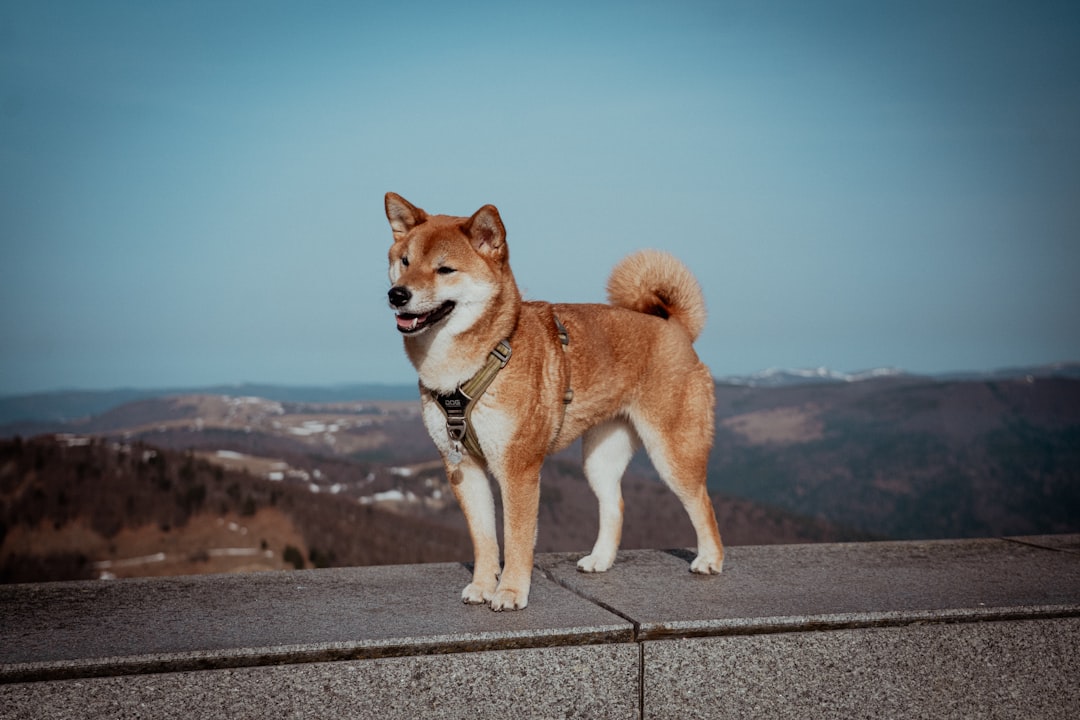
Every “top dog hikes near Denver” list reads the same way: pretty photo, mileage, done. What those lists skip is the part that actually matters if you’re hiking with a dog who has opinions, a bad hip, a bite history, or a tendency to lock onto anything that moves fast through tall grass. Difficulty rating isn’t just about how tired your legs get. It’s about elevation gain on joints, trail width and traffic for reactivity management, altitude and terrain for conditioning, and whether the environment is going to keep your dog under threshold or push them right over it.
Here’s a curated set of ten trails within about 50 miles of Denver, sorted by difficulty, with the behavioral and physiological context most guides leave out. Leash laws apply across every open space and state park system listed here, so plan accordingly.
Why Difficulty Rating Isn’t Just About Distance
A 3-mile loop with 1,200 feet of elevation gain asks something completely different of a dog’s body than a flat 3-mile loop on crushed granite. Steep, uneven terrain recruits stabilizer muscles and demands constant proprioceptive adjustment (that’s your dog’s sense of where their paws and joints are in space without looking). That’s great conditioning for a fit dog. It’s a recipe for a flare-up in a dog with early arthritis, hip dysplasia, or a healing soft tissue injury.
Then there’s the behavioral side. Trail width and traffic volume determine how much control you have over your dog’s exposure to triggers, whether that’s an off-leash dog barreling around a blind corner or a mountain biker who appears with zero warning. A trail can be physically easy and behaviorally hard, or the reverse. Match both dimensions, not just one.
Easy Trails: Built for Seniors, Recovery, and Low-Arousal Days

These three are your go-to when you need low-impact movement without asking your dog’s body or nervous system to work overtime.
- Lair o’ the Bear Park (Bear Creek Trail), Idledale: A shaded, roughly 1.7-mile out-and-back that runs alongside Bear Creek under big cottonwoods. The creek access is genuinely useful here, not just scenic. Letting a dog wade and cool their paws is a legitimate way to support thermoregulation on a warm day, since dogs dump heat mainly through panting and paw pad contact rather than sweating through skin like we do.
- South Valley Park (Coyote Song Trail), Littleton: A flat, wide, roughly 3-mile gravel loop with red rock views and none of the steepness of nearby parks. The width matters for reactive dogs: you get real distance to create space from other trail users without having to leave the trail entirely.
- Washington Park Loop, Central Denver: A flat, 2.3-mile paved and crushed-granite perimeter path around two lakes. Zero commute, easy access, and physically about as low-impact as it gets. The tradeoff: it’s an urban park, which means more foot traffic, cyclists, and off-leash dogs. Easy on the joints doesn’t mean easy on the nervous system. If your dog struggles with sudden approaches, this one takes more active management despite the flat terrain.
Moderate Trails: Conditioning Plus Arousal Management

This tier is where most fit, foothills-acclimated dogs live, but the behavioral considerations get more interesting.
- Mount Falcon Park (Castle Trail to Walker’s Dream), Morrison: 3.5 to 7 miles depending on your loop through ponderosa pine, with the ruins of the historic Walker home along the way and sweeping plains views.
- Mount Galbraith Loop via Cedar Gulch, Golden: A rocky, steadily climbing 4.9-mile loop that’s hiker-only, meaning no fast-moving mountain bikes to dodge. If your dog has a startle response to bikes flying around blind curves, this is a meaningfully lower-stress choice than a multi-use trail of similar difficulty, since you’re removing one entire category of unpredictable trigger.
- Reynolds Park (Eagle’s View Trail Loop), Littleton: A 4.2-mile loop through Douglas fir and open meadow with views of Pikes Peak and the Cathedral Spires. It tends to run quieter than trails closer to Denver, which is worth knowing if crowd density itself is a stressor for your dog.
- Chautauqua Park Loop, Boulder: A 3.6-mile loop directly under the Flatirons. Boulder’s open space rules are strict here: dogs must be leashed unless you hold a specific voice-and-sight tag issued by the city. Worth saying plainly, that tag is a legal permission, not a behavioral guarantee. A dog who’s earned voice-and-sight privileges can still get overwhelmed by a busy Saturday crowd, and leashing up when things get dense is always a legitimate call, tag or no tag.
- Elk Meadow Park (Sleepy S Loop), Evergreen: A 2.6-mile loop with rolling terrain and frequent elk sightings in wide meadows. This is worth flagging specifically. Elk grazing at a distance can look completely benign right up until one starts moving fast, and fast movement from a large animal is exactly the kind of stimulus that can trigger predatory drift, a sudden shift from normal, social behavior into instinctive chase mode. It’s not aggression in the usual sense, it’s an ancient motor pattern getting flipped on. Keep dogs leashed and put real distance between your dog and any elk you spot, even ones that seem to be ignoring you.
Hard and Strenuous Trails: What “High Stamina” Actually Means

These two trails are genuinely tougher than their mileage suggests, and that gap between “looks short on paper” and “feels brutal on the ground” is exactly where people overestimate their dog’s readiness.
- Mount Sanitas Loop, Boulder: Only about 3.1 miles, but a relentless, steep climb over rocky ridges and wooden log steps to a 360-degree summit view of the Continental Divide. The log steps in particular demand repetitive, controlled joint flexion, which is a fine workout for a conditioned dog and a real strain for one who hasn’t built up to it. Don’t take a dog whose longest recent hike was a walk around the block and expect their joints or cardiovascular system to just handle it.
- Golden Gate Canyon State Park (Raccoon Trail Loop), Golden: 2.5 to 4 miles through aspen groves, dense pine, and granite boulder fields at higher altitude. Rugged, rooted, and steep in sections. Granite is abrasive on paw pads over distance, so this is a trail where checking pads afterward, and considering boots for dogs prone to wear or with sensitive pads, actually matters. A Colorado State Parks pass or day vehicle pass is required for entry, so budget that into your trip.
A quick physiological note on altitude and exertion: dogs with short, flat faces (think bulldogs, pugs, Boston terriers) already work harder to move air efficiently even at rest, because their airway anatomy is more restrictive. Add elevation gain and thinner air at higher trailheads, and that inefficiency compounds fast. If that’s your dog, the moderate list is a better ceiling than the strenuous one, regardless of how much they seem to want to keep going. Dogs are notoriously bad self-reporters when they’re excited.
Matching the Trail to the Dog You Actually Have
The mileage and elevation numbers above are only half the decision. The other half is honest self-assessment about what your specific dog needs on a given day.
- If your dog is reactive to other dogs or fast movement, prioritize hiker-only trails (Mount Galbraith) or wider paths with more room to create distance (South Valley Park) over narrow, high-traffic corridors, even if the narrow one is technically “easier.”
- If your dog is a senior or recovering from injury, flat and shaded beats scenic and steep every time. Bear Creek’s water access is a genuine asset here, not just a nice photo backdrop.
- If your dog has any prey drive history, treat elk meadows and open grassland with real caution and keep the leash short and the distance long, regardless of how calm the elk look in that moment.
- If your dog is brachycephalic or deconditioned, build up gradually through the easy and moderate tiers before attempting Sanitas or Golden Gate Canyon. There’s no shame in a shorter, flatter route that both of you actually enjoy.
None of these trails are inherently “good” or “bad” for a dog. They’re tools. The job is picking the right one for the dog in front of you, not the one that photographs best.
Source
Day Hikes Near Denver; Delightfully Denver; BringFido; Outdoor Holiday. “Dog-Friendly Hiking Trails Near Denver.” Web, 2026.
Have a dog who makes boarding feel risky?
This is exactly the kind of thing MayDay Co. specializes in. Fear-Free, science-based care for dogs who need a little more understanding, not a one-size-fits-all kennel.
Leave a Reply