
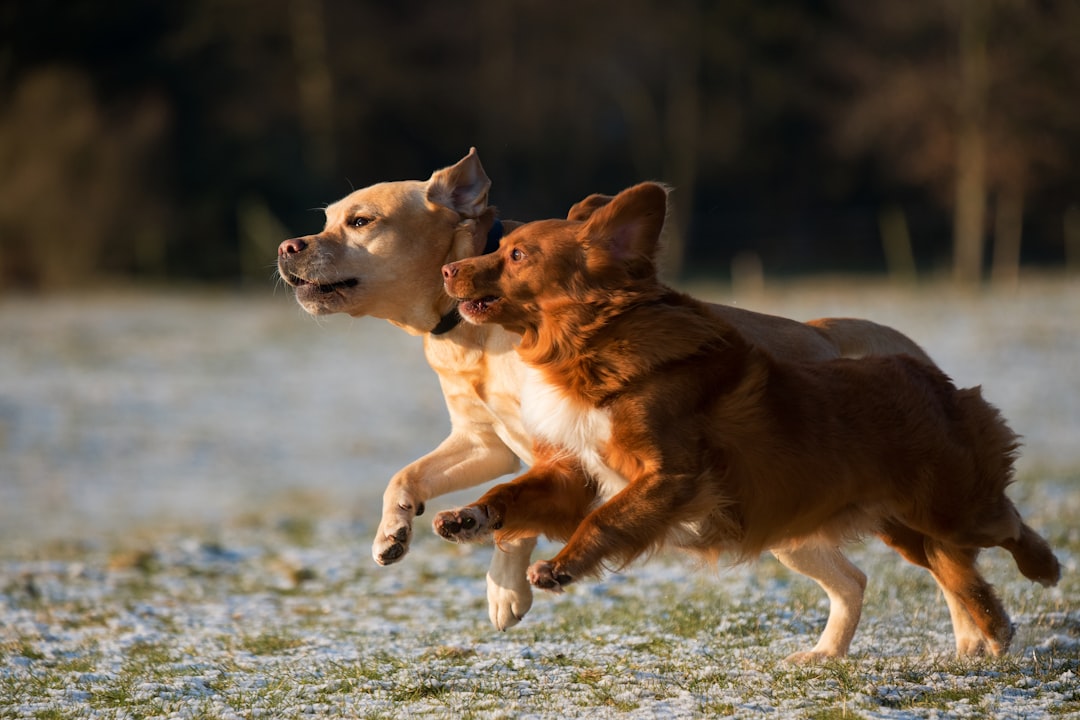
Every daycare brochure uses the word “socialization” like it’s a magic spell. Drop your dog off, they play with other dogs, they come home tired and well-adjusted. That’s the pitch. But socialization isn’t just exposure to other dogs. It’s a specific, reciprocal, consent-based process, and when it goes wrong, it doesn’t always look dramatic. Sometimes it looks like a dog getting run into the ground by three bigger dogs while a staff member watches from across the room, not realizing anything is off.
If you’ve got a dog with any sensitivity at all, whether that’s fear, reactivity, or just a slow-to-warm personality, knowing what forced play actually looks like matters more than any facility’s marketing language.
What Healthy Play Actually Requires
Good play between dogs is built on reciprocity, meaning both dogs are initiating, both are chasing and being chased, both are on top and on bottom during wrestling. It’s a back and forth conversation, not a monologue.
Healthy play also involves self-handicapping, which is when a bigger or more confident dog deliberately holds back, letting the smaller or less confident dog “win” a chase or pin them for a few seconds. You’ll see a big dog flop onto their back or slow their gait to let a puppy catch up. That’s a dog reading the room and adjusting, not just barreling forward at full speed because they can.
The other piece people miss is the pause. Real play has natural breaks built into it. Dogs disengage, shake off, sniff the ground, check in with each other, and then decide together whether to start back up. Play bows show up here too, that front-end dip with the rear in the air, signaling “everything I do next is a game.” If you watch a group of dogs playing well, you’ll notice it looks less like nonstop chaos and more like a series of short scenes with breaks in between.
Why Group Daycare Settings Push Against All of This
A daycare playroom is not a natural social environment for dogs. It’s a small space packed with dogs who didn’t choose each other, often mismatched in size, age, and play style, with limited ability to actually leave a bad interaction.
In the wild, or even just in a backyard, a dog who’s done with an interaction can walk away and put real distance between themselves and whoever is bugging them. In a daycare room full of dogs and furniture and other bodies, there’s often nowhere to go. That lack of an exit route alone can turn a mildly uncomfortable interaction into something closer to flooding, where a dog is stuck in a stressful situation with no way to escape it, which tends to make the underlying fear or discomfort worse over time instead of better.
Add in a group of dogs with wildly different arousal thresholds and you get a setup where one or two high-energy dogs can drag the whole room’s arousal level up, and a quieter or more sensitive dog gets swept along whether they want to be or not.
What Forced Play Actually Looks Like in the Moment

This is the part that matters most if you’re trying to evaluate whether your dog’s daycare experience is actually good for them, or just loud and busy-looking.
- One dog is always the chaser, never the chased. Real play rotates. If the same dog is always on top, always doing the pinning, always initiating, that’s not a mutual game anymore.
- No pauses. If the play never stops, never has a check-in moment, and just escalates in intensity the longer it goes, that’s a sign arousal is climbing past the point where either dog can make good decisions.
- Stiff bodies instead of loose ones. Healthy play involves loose, bouncy, exaggerated movement. A stiff, low body, hard stare, or a tightly closed mouth during “play” is a very different signal than a floppy, open-mouthed dog bouncing around.
- Avoidance that gets ignored. A dog turning away, ducking behind a person or object, or trying to create distance is communicating clearly. If the other dog keeps following and the interaction keeps going anyway, that avoidance signal is being run over.
- One dog repeatedly pinned or mounted with no ability to get free. A quick pin during mutual wrestling is normal. Being held down repeatedly with no chance to get up and reset is not.
Individually, a lot of these signs can look pretty subtle from across a room, especially if you’re not specifically watching for them. That’s part of why they get missed so often, not because staff don’t care, but because forced play doesn’t always look like a fight. It can look like enthusiastic chasing, which is exactly why it gets waved off as “just playing.”
Common Misconceptions Worth Clearing Up

A tail wag doesn’t automatically mean a dog is happy. A stiff, high, fast wag can go along with high arousal or even anxiety just as easily as it can go along with genuine joy. Context and the rest of the body matter more than the tail alone.
Growling and barking during play aren’t automatically red flags either. Dogs vocalize plenty during totally normal, mutual, healthy play. The question isn’t whether there’s noise, it’s whether both dogs are still choosing to be there, still taking turns, and still able to walk away if they want to.
And “they’ll work it out themselves” is one of the more dangerous assumptions floating around group play settings. Sometimes dogs do sort things out on their own just fine. But when one dog is clearly overwhelmed and the other is oblivious or pushy, waiting for them to “work it out” often just means waiting for the stressed dog’s cortisol response (the body’s stress hormone reaction) to keep climbing until something breaks, whether that’s a snap, a shutdown, or a dog who now actively dreads daycare.
What to Actually Do With This Information

If you’re evaluating a daycare, ask how they group dogs, whether they rotate based on play style rather than just size, and whether staff are trained to interrupt play before it escalates rather than after something already happened. A facility that separates dogs by temperament and energy level, not just weight class, is doing more of the actual work here.
Ask, too, about how many dogs are in a group per staff member, and whether staff are actively moving through the room watching body language, or mostly stationed at the edges. Active supervision looks like someone who steps in during a stiff moment before it turns into anything, not someone who reacts once a real scuffle breaks out.
If your dog comes home from daycare consistently wound up in a bad way, avoidant of other dogs, or newly reactive on leash, that’s data. It doesn’t necessarily mean the facility is careless, but it does mean the play happening in that room isn’t matching what your dog can actually handle. Trust that pattern over the brochure every time.
Source
AKC, “Dogs Playing or Fighting?”; ASPCApro, “Interpreting Inappropriate Play”; Sniffspot, “Signs of a Poorly Socialized Dog”; Good Dog Happy Owner, “Interpreting Dog Play: Healthy vs. Problematic Play.”
Have a dog who makes boarding feel risky?
This is exactly the kind of thing MayDay Co. specializes in. Fear-Free, science-based care for dogs who need a little more understanding, not a one-size-fits-all kennel.
Leave a Reply