
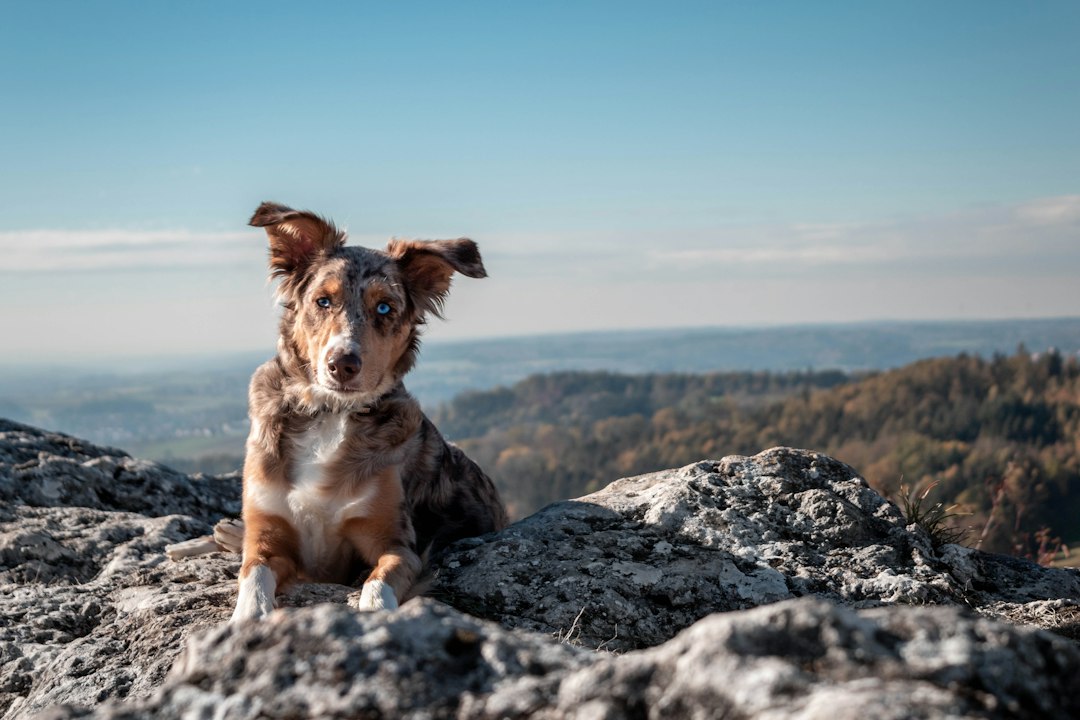
You know the moment. Your dog was calm thirty seconds ago, and now they’re doing full-speed laps around the coffee table with their ears pinned back and a look on their face that says they’ve briefly left this dimension. Then it stops, just as suddenly, and they trot off to get a drink of water like nothing happened.
That’s a FRAP, short for Frenetic Random Activity Period, and it’s actually a documented behavioral term, not just something dog owners made up to describe their pet’s chaos. Understanding what’s driving it changes how you respond to it, and honestly, makes it a lot more fun to watch.
What a FRAP Actually Is
A FRAP is a sudden, short burst of intense, seemingly uncontrollable physical activity. Think running in tight circles, zigzagging across a room, spinning, or doing what looks like a lap around the yard at a dead sprint. It comes on fast, it’s over fast, and there’s usually no obvious external trigger you can point to in the moment.
This isn’t unique to dogs, either. Cats get their own version of the zoomies, often described as the “midnight crazies,” and the pattern shows up in other species too. The consistency across species is actually a clue that this is something built into how animals regulate energy and arousal, not a quirk specific to your particular dog.
What separates a FRAP from, say, an anxious dog pacing or a dog reacting to a trigger is the quality of the movement. It’s loose, bouncy, often paired with play signals, and it resolves on its own without any intervention needed. It’s not a dog trying to escape something. It’s a dog releasing something.
Why It Happens: The Actual Mechanism

The leading explanation is that FRAPs are a release valve for built-up energy or built-up arousal, physical or emotional, that hasn’t had anywhere to go. Dogs, especially young ones, accumulate energy throughout the day. When that energy peaks past a certain threshold, the body seems to just discharge it in one concentrated burst rather than in a slow, steady trickle.
Researcher Marc Bekoff, who has spent a career studying play behavior in animals, frames zoomies as a legitimate form of play, and play in dogs isn’t just cute, it’s functional. It’s how young animals practice movement, coordination, and self-control in a low-stakes way. A FRAP lets a dog run flat-out, change direction on a dime, and burn through arousal without any actual consequence, which is a pretty efficient way to practice being a fast, agile animal.
There’s also a stress-relief angle. A lot of zoomies show up right after something mildly stressful or overstimulating ends, like a bath, a nail trim, or a vet visit. The working theory is that the burst of activity helps the body process a spike in stress hormones like cortisol and physically shake off the tension of whatever just happened. It’s not that different from a person needing to pace after a stressful phone call, just with more spinning.
When Zoomies Actually Show Up

If you’ve had a dog for any length of time, you’ve probably already clocked the pattern of when these happen. The triggers tend to cluster around a few predictable moments:
- Right after a bath. This is probably the most universally reported FRAP trigger, and it’s likely a mix of relief that the ordeal is over and the strange sensory feeling of being wet and confined during it.
- First thing in the morning or right after a nap. Energy has been sitting dormant, and the first few minutes of being awake and mobile again is a common release point.
- Evening, often called the “witching hour.” Many dogs get a predictable burst of chaos in the early evening, which seems to track with a natural dip in energy regulation as the day winds down.
- Right after pooping. Nobody has a fully satisfying explanation for this one, but it’s reported often enough to be its own category of zoomies.
- After a period of confinement or restraint. Coming out of a crate, finishing a car ride, or being let off leash after a long walk can all trigger it.
Puppies and adolescent dogs tend to have FRAPs more frequently and more intensely, which tracks with the idea that this is partly about practicing physical coordination during a developmental window. But plenty of adult dogs, and even senior dogs, still get the occasional zoomies. It doesn’t mean anything is wrong with them if it slows down with age.
Misconceptions Worth Clearing Up
A few things get misunderstood about this behavior pretty consistently:
- “My dog is out of control.” A FRAP looks wild, but it’s a normal, self-limiting behavior pattern, not a loss of behavioral control in the way a panic response or a reactive episode is. The dog isn’t distressed during it, even if the energy looks intense.
- “Only puppies get zoomies.” Puppies get them more often, but adult dogs absolutely still experience FRAPs, especially after baths or high-arousal events.
- “It means my dog isn’t getting enough exercise.” Sometimes pent-up energy is a factor, but a well-exercised dog can still get a FRAP after a bath or a stressful vet appointment. This is about arousal discharge, not just a fitness deficit.
- “I need to stop it immediately.” Unless your dog is about to crash into furniture or run into traffic, there’s usually no reason to intervene. Trying to physically stop a FRAP mid-burst can actually be more disruptive, and occasionally risky, than just letting it play out somewhere safe.
What To Actually Do When It Happens

Management here is mostly about environment, not correction. If your dog is prone to zoomies after baths, clear a path in a room without sharp furniture corners before you towel them off. If it’s an outdoor dog running laps in the yard, just let it happen, it’ll resolve itself in under a minute in most cases.
The one time to pay closer attention is if what looks like a FRAP is happening far more often than usual, lasts unusually long, or is paired with signs of actual distress like whale eye, tucked tail, or panting that doesn’t fit the context. That combination is worth mentioning to your vet, since it could point to an underlying anxiety issue or, in rare cases, a neurological one, rather than a garden variety energy release.
For the vast majority of dogs, though, a good zoomie session is just a healthy nervous system doing exactly what it’s supposed to do. Grab your phone, get the video, and let them run it out.
Source
“What are zoomies?” Cornell University College of Veterinary Medicine; “Frenetic Random Activity Periods.” Wikipedia; Bekoff, Marc. “Playful fun in dogs.” Current Biology, vol. 25, no. 1, 2015, pp. R4-7.
Have a dog who makes boarding feel risky?
This is exactly the kind of thing MayDay Co. specializes in. Fear-Free, science-based care for dogs who need a little more understanding, not a one-size-fits-all kennel.
Leave a Reply